

Plastic molding injection companies form the invisible backbone of modern manufacturing, producing everything from medical devices to automotive components with tolerances measured in thousandths of a millimetre.
Walk through any hospital, factory, or home and you will encounter hundreds of injection-moulded parts, each one the product of a manufacturing process that combines extreme precision with industrial scale. The remote control in your hand, the housing on your computer, the components inside your car’s dashboard: all bear the hallmarks of injection moulding, a process that has quietly revolutionised how we make things.
The Process Behind the Parts
Injection moulding operates on principles that sound straightforward but demand exacting control. The basic steps include:
Material Preparation
Plastic pellets are heated until molten, reaching precise temperature ranges specific to each material type
Injection Phase
Molten plastic is forced under high pressure into a precisely machined mould cavity
Cooling Stage
The plastic solidifies whilst maintaining dimensional accuracy within the mould
Ejection
The mould opens and the finished part is removed, with cycles repeating dozens of times per minute
Yet this description obscures extraordinary complexity. Temperature must be controlled within narrow bands. Injection pressure affects part quality but can damage moulds if excessive. Cooling time influences cycle speed and dimensional accuracy. Material selection determines everything from strength to colour to how the part ages over time.
Plastic molding injection companies master these variables through years of accumulated knowledge, sophisticated equipment, and rigorous quality control. The difference between a mediocre manufacturer and an excellent one often comes down to understanding the subtle interactions between process parameters that textbooks cannot fully capture.
Singapore’s Manufacturing Ecosystem
Singapore occupies a distinctive position in the global landscape of plastic injection moulding. The nation lacks the low labour costs that drive manufacturing in neighbouring countries, yet it hosts a thriving sector focused on high-precision, high-value components. This apparent paradox reveals much about how modern manufacturing actually works.
In conversations with industry professionals, a clear picture emerges. Singapore’s plastic molding injection companies compete not on price but on capability. They serve industries where part failure carries severe consequences:
- Aerospace components requiring exceptional strength-to-weight ratios
- Medical devices demanding biocompatible materials and sterile manufacturing
- Semiconductor equipment needing ultra-precise dimensional tolerances
- Precision instruments where consistency across production runs is critical
“Our clients come to Singapore not because we are cheap but because we can deliver parts that meet specifications every single time,” explained a production manager at a facility in Jurong. “When you are making components for medical implants or aircraft systems, reliability is not negotiable.”
What Defines Quality Manufacturing
The best plastic molding injection companies share certain characteristics that separate them from commodity manufacturers:
Mould Design Expertise
Superior moulds produce superior parts. Top manufacturers invest heavily in mould design and maintenance, understanding that tool quality determines output quality
Process Control Systems
Real-time monitoring of temperature, pressure, and cycle time ensures consistency across production runs
Material Knowledge
Different applications demand different plastics. Manufacturers must understand how materials behave under various conditions
Quality Assurance
Dimensional inspection, material testing, and statistical process control catch defects before they reach customers
Clean Room Capabilities
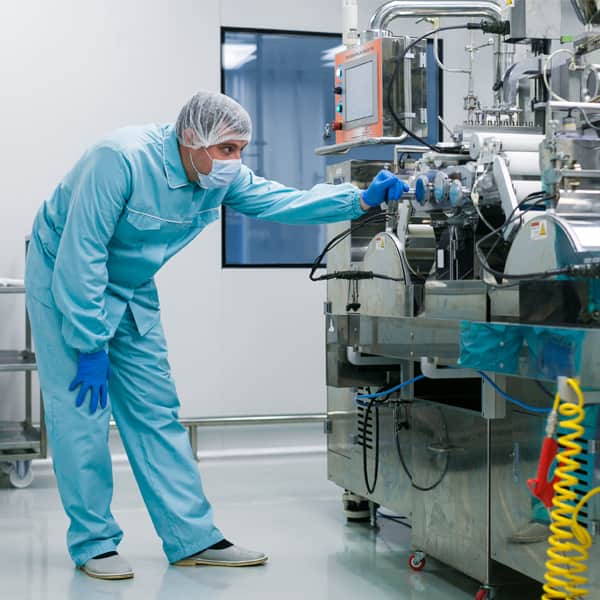
Medical and electronics applications require contamination-free manufacturing environments
Documentation Standards
Comprehensive record-keeping for traceability and compliance with industry regulations
These capabilities require substantial capital investment and skilled workers, resources not uniformly available across manufacturing centres.
The Human Element
Behind the automation and precision machinery work people whose expertise determines success or failure. Mould technicians who can diagnose problems from subtle changes in cycle time. Quality inspectors who spot dimensional drift before it produces defective parts. Engineers who redesign components to improve manufacturability whilst maintaining function.
One senior technician in Singapore, with three decades of experience, described the knowledge that separates journeyman from master: “You learn to hear when a machine is running right. You feel it in the rhythm. When something changes, even slightly, you investigate before problems appear.”
This intuitive understanding, built through years of close attention, cannot be easily replicated or transferred. It represents the human capital that makes certain plastic molding injection companies more capable than others despite using similar equipment.
Market Forces and Future Directions
The industry faces pressures that will reshape it in coming years:
Environmental Concerns
Growing demand for recyclable materials, biodegradable plastics, and reduced manufacturing waste
Labour Shortages
Accelerating automation and robotics integration to maintain production capacity
Supply Chain Disruptions
Exposing vulnerabilities in global manufacturing networks and driving localisation strategies
Regulatory Requirements
Stricter quality standards and compliance documentation across multiple industries
Technology Integration
Smart manufacturing systems with IoT sensors and predictive maintenance capabilities
“We cannot compete with high-volume, low-margin production,” noted an industry analyst familiar with the sector. “Singapore’s plastic molding injection companies succeed by tackling the difficult jobs that others cannot handle reliably.”
Selecting a Manufacturing Partner
For companies seeking injection moulding services, understanding these distinctions matters enormously. Smart buyers evaluate potential partners on multiple dimensions:
Technical Capability
Can they handle your material requirements and tolerances?
Quality Systems
Do they maintain ISO certifications and industry-specific standards?
Communication
Will they collaborate on design for manufacturability?
Financial Stability
Can they sustain operations and honour long-term commitments?
Track Record
What do existing customers say about reliability and problem-solving?
They visit facilities, inspect sample parts, and speak with existing customers. They understand that choosing a manufacturer is choosing a partner whose capabilities and limitations will affect their own products.
The Invisible Industry
Plastic molding injection companies operate largely outside public awareness, yet their work touches virtually every aspect of modern life. The precision parts they produce enable technologies we take for granted. In Singapore and other advanced manufacturing centres, these companies are evolving beyond simple production to become engineering partners who contribute to product development and improvement. Their future depends not on competing with low-cost producers but on delivering capabilities that justify premium positioning, where success belongs to plastic molding injection companies that master complexity rather than merely scale.
