

Anyone who has lived under the San Gabriel Mountains through a bad fire year remembers when the smoke got inside. During the Colby Fire in 2014 and the Bobcat Fire in 2020, it wasn’t the orange sky that bothered people most. It was the moment they smelled smoke in the hallway with every window shut and the air conditioner running, and realized the house wasn’t sealed.
That gap between what we expect from a cooling system and what it actually does matters most in October. Santa Ana winds come down the canyons, red flag warnings stack up, and a fire burning twenty miles away can still haze over the valley by evening. For homeowners who want someone to look at their particular setup, Glendora Hills AC and Heat is a family-owned outfit rooted in the Glendora foothills. Its crews handle duct sealing and indoor air quality upgrades alongside furnace, central air and ductless work across ten neighboring cities. Still, the best way to understand your home’s defenses is to walk through it yourself, starting at the top.
Start Overhead, Where the Trouble Usually Begins
Most foothill ranch homes from the postwar decades run their ductwork through the attic. On a smoky day, the attic holds the same air that’s outside, only hotter and dustier. If the return ducts have loose seams or a crushed joint near the air handler, the system pulls that air straight into the living space and spreads it to every room.
You can often see this from below. Dust streaks fan out around ceiling registers, filters go gray within days, and one bedroom smells of smoke while the kitchen seems fine. The attic hatch itself is another weak spot. A loose access panel with no weatherstripping is basically a vent into the hallway. Sealing return leaks with mastic and gasketing the hatch does more than any filter can, because it closes the path before the air ever reaches the filter.
The Grille in the Hallway
Next stop is the return grille, where the filter usually sits. Wildfire smoke is made mostly of fine particles called PM2.5, small enough to get deep into the lungs. The flimsy fiberglass filter that comes standard in many homes was designed to keep lint off the blower, and smoke goes right through it.
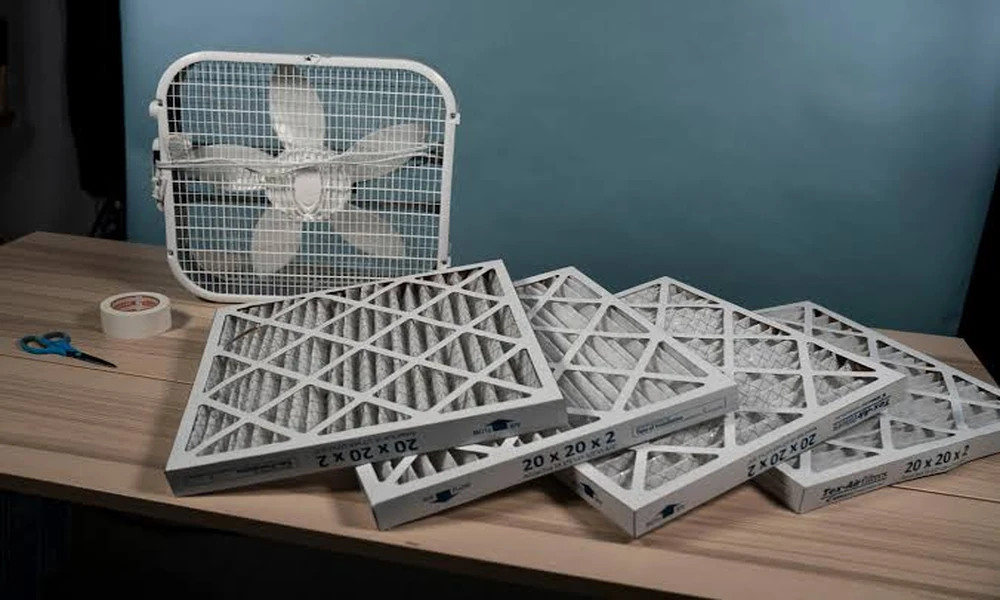
The EPA’s guidance on wildfires and indoor air quality recommends filters rated MERV 13 or higher during smoke events. It notes that most home systems can run one, provided it’s changed often. That proviso matters. A dense filter fills quickly when the outside air is thick, and a clogged filter chokes airflow over the cooling coil just when the afternoon heat peaks. A deep four or five inch media cabinet spreads the same filtration over far more surface, so it restricts airflow much less than a one inch filter at the same rating.
The thermostat on the same wall plays a part too. Left on Auto, the fan only moves air through that filter while the system is heating or cooling. Switching it to On keeps air passing through the filter all day, and that’s when an upgraded filter really earns its keep.
Kitchen, Laundry and Bath
This is where good intentions often fall apart. Every appliance that blows air out of the house forces the same volume back in through cracks, and on a smoky day that air brings smoke with it. The usual culprits are
- the range hood over the stove,
- bathroom exhaust fans left running after a shower,
- the clothes dryer venting out the side wall,
- and two foothill favorites, the whole house fan and the evaporative cooler, which both work by pulling large volumes of outdoor air through the home.
The whole house fan and swamp cooler should stay off completely until the air clears. The others can run briefly when they’re really needed, but each one works against everything the filter is trying to do.
The Bedroom as a Fallback
Even with the main system dialed in, one room deserves extra attention, and it’s usually where people sleep. If that room has a ductless mini split, keep in mind that its washable mesh screen catches very little fine smoke. A portable HEPA air cleaner sized for the room, running with the door closed, turns it into the kind of clean room public health agencies recommend during long smoke events. For anyone with asthma, heart trouble, or a newborn in the house, that one room matters more than any other upgrade.
Out in the Side Yard
The condenser outside doesn’t filter anything, but it still pays for fire season. Ash and soot settle into its thin aluminum fins, and October Santa Anas can push afternoons into the nineties, so the unit works hard through a blanket of grime. Once the smoke clears, switch off the power at the disconnect and rinse the coil gently from the inside out with a garden hose. A pressure washer will flatten the fins. Clearing dry leaves and brush away from the unit also counts as part of basic defensible space around the house.
Walking It Back After the Sky Clears
The haze may lift overnight, but the house holds onto smoke for days. Swap the filter right away, even if it’s barely a week old, because a loaded filter keeps releasing odor every time air passes through it. When AirNow readings return to green or yellow, open the house to flush it, and keep the fan running on a fresh filter for another day. Wipe surfaces with a damp cloth rather than a duster, which just lifts fine particles back into the air. If one room or one register still smells days later, ash is probably sitting inside the ductwork, and that’s worth having inspected.
None of this requires expensive equipment. It takes knowing your own house before you need to, which filter fits the slot, which fans to leave off, and whether the attic is leaking into the hallway. One calm afternoon learning those things before the fire season starts is well spent.
Can Your AC Keep Fire Season Smoke Out of the House?
