
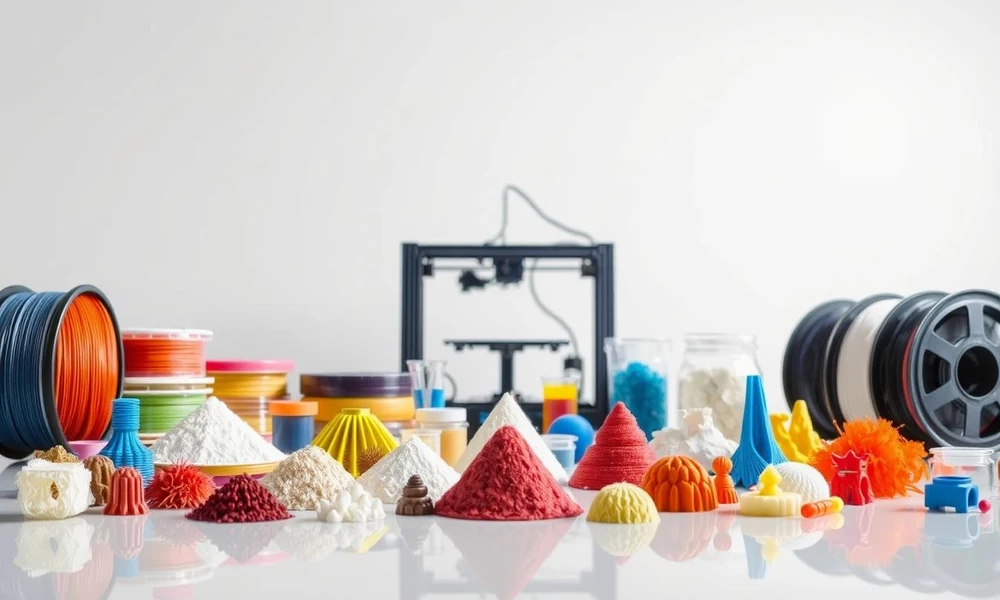

No matter how smart a 3D printer is, its final product relies a lot on the material used. The filament can’t be the right model or settings if the printer isn’t designed well. The right filament material for the 3D printing project can enhance the overall quality of prints, minimize mistakes, and create aesthetically pleasing and sturdy products.
There are numerous uses for 3D printing. Some develop a model to be used in the school or university, and some develop prototypes, replacement parts, home accessories or creative designs. The selection of filament is an important part of a project before it is printed and different projects require different types of filament.
When you’re using trusted material, each print has more of a base and you’re able to get better results with less effort.
A variety of materials are needed for different projects.
No one filament is suitable for all applications. This will depend on how the finished product will look to serve the purpose. A smooth finish and attention to detail typically are needed for decorative models, but additional strength or flexibility may be necessary for functional parts.
The simplicity of printing and the good surface quality make PLA still one of the most popular materials. Suitable for display objects, models for educational purposes or for general printing. PETG is more durable and can be used for a variety of products that are used on a daily basis. Higher heat resistance applications can benefit from the choice of ABS.
When choosing 3D printer filament, it’s important to consider the purpose if the printed part will be used. When selecting material for a job, it is often best to match the material with the job to ensure the best appearance and a long service life for the finished product.
Consistent Filament provides consistent results.
High quality filament is produced under careful control of diameters and compositions of the filament. The consistency enables the printer to maintain an even feed rate, resulting in smooth layers and precise dimensions during the printing process.
Poor filament quality may sometimes result in uneven filament sizes, weak bonding of layers, and surface irregularities. This can result in poor prints, wasted material and additional time spent debugging.
Although 3D printing projects are unpredictable by themselves, filament that is reliable makes them more so. After finding the ideal print settings, they can often be replicated with ease for multiple prints. This is particularly useful for those who create functional components or print many objects on a frequent basis.
The care of the filament is important!
All good filament works best when properly stored. A lot of print media have a tendency to absorb water from the air, which causes the quality of prints to degrade over time. Bubbles, stringing and uneven surfaces might occur during printing with damp filament.
Humidity can be prevented by storing the filament in airtight containers or storage bags with desiccant. Spools also last longer and maintain printing performance when stored in a cool, dry location.
Inspecting filament before starting an important print is a simple practice which can stop the needless print failures. One of the simplest methods of maintaining consistent printing results without changing your printer is to have good storage.
Small Decisions Make for Better finished prints
Many people think that better print quality only comes with expensive upgrades. In fact, a wise choice of materials can make a much greater impact than new accessories. Good filament makes the printer smooth to operate and better to print, as it gives better strength, cleanliness and accuracy to the printed parts.
Reliable filament for 3D printing projects can eliminate some of the commonly occurring printing issues, enhance surface finish, and boost confidence with each new printing job. It also saves time by minimizing the number of prints that are failed and by also allowing the printer to be more easily controlled.
From prototypes to home repairs, education, business designs and the like, choosing the right filament is a simple investment that pays dividends in the long-term. If the right material is used, it’s stored correctly and printed with good work, then each project has a much greater likelihood of being a print you’ll be proud of.
